
Traditional Games in Africa: History, Types and Examples
Traditional games in Africa reflect the skills, knowledge and social traditions passed between generations. Some of these African local games involve strategy and counting, others test strength, speed, balance or coordination. Also, many of these traditional games are played with simple materials such as seeds, stones, sticks, ropes and handmade balls.
These games have different meanings across Africa. Some are associated with childhood and community gatherings, while others developed as organised sports, wrestling traditions or tests of physical skill. So, their rules and names can also vary between communities.
In addition to wildlife safaris and visits to historical sites, traditional African games are another way for travelers to experience local culture. Visitors to Uganda, Senegal, or Ghana can learn to play Omweso, watch traditional wrestling or try a rhythmic game such as Ampe to introduce them to the people, stories and everyday traditions behind each activity.
Goar Africa Safari Tours encourages travellers to look beyond the usual safari itinerary and explore the cultural experiences available in the destinations they visit. Where local hosts and suitable activities are available, traditional games can be included as part of a wider African cultural safari experience.
What Are Traditional Games in Africa?
Traditional African games are recreational activities, sports, and forms of competition that have been passed down through communities over time. They include board games, children’s playground games, wrestling, stick fighting, ball games, rhythmic challenges, and activities involving stones or other small objects.
Some of these local games are closely associated with particular African cultural groups or regions. Others have related versions across several countries in Africa, with differences in equipment, language and rules.
In African cultures, traditional games have played various roles:
-
Entertainment: Bringing children, families, and local communities together.
-
Physical development: Improving balance, agility, strength and coordination in the community for example in traditional wrestling games.
-
Mental skills: Teaching counting, planning, memory and decision-making indirectly amongst participants.
-
Social learning: Helping the local players to understand rules, cooperation, competition and fair play like the Omweso game in Uganda.
-
Cultural continuity: Passing on local names, songs, playing methods and shared memories in a cultural group.
Not all traditional games served the same purpose in history, and it is not important to assume that all traditional games were created for warfare or survival. Many are everyday forms of play whose significance comes from the way communities have practiced and passed them on.
Types of traditional games in Africa
1. Traditional board games
Just like the modern world came up with board games like chess, in the early years the members of the local community came up with their own local kind of board games. These are played on a wooden board with either seeds or even shells. Also, early merchants would use these boards in calculating inventory or debts alongside other kind of arithmetic methods.
Examples include Omweso in Uganda, Bao in East Africa, and Oware in West Africa. Although these games share features, their boards and rules are not always the same.
2. Traditional Wrestling and Combat Sports
Wrestling and stick-fighting traditions in Africa test strength, balance, timing and technique. They may be performed during competitions, cultural gatherings or other community events.
Examples include Laamb in Senegal and Nguni stick fighting in southern Africa. They are their own activities, with their own rules and cultural contexts, and should not be conflated as interchangeable forms of combat.
3. Rhythm and Coordination Games
Some local African games combine clapping, jumping, singing and coordinated foot movements. Players must keep time while responding to an opponent’s actions. Ampe, played in Ghana, is a well-known example. It requires no special equipment and can involve two players taking turns while others watch, cheer or join the next round.
4. Traditional Ball and Dodging Sports in Africa
These ball dodging games test speed, reflexes, movement and awareness. Players throw a ball, dodge it, pass it between teammates or aim at a target. Kwepena is a traditional game played in Uganda in which players attempt to avoid a thrown ball. Local versions of dodging games exist elsewhere, and their rules may differ.
5. Stone, Marble and Ground Games
Children in Africa have long used stones, marbles and other small objects in games that require accuracy and control. Some involve flicking an object into a hole, striking another object or completing a sequence of moves. Duulu is an example associated with Uganda. The exact equipment and rules may vary by community.
6. Rope, Jumping and Chasing Games
Rope-jumping, chasing and hopping games challenge players to follow patterns, react quickly or move through a marked playing area. Songs and chants may accompany some versions. These activities are often played in schoolyards, open spaces and neighborhoods in Africa. Also, their simple equipment makes them easy to organize, although local rules determine how a round is scored.
12 Traditional Games in Africa and How They Are Played
1. Omweso – Uganda
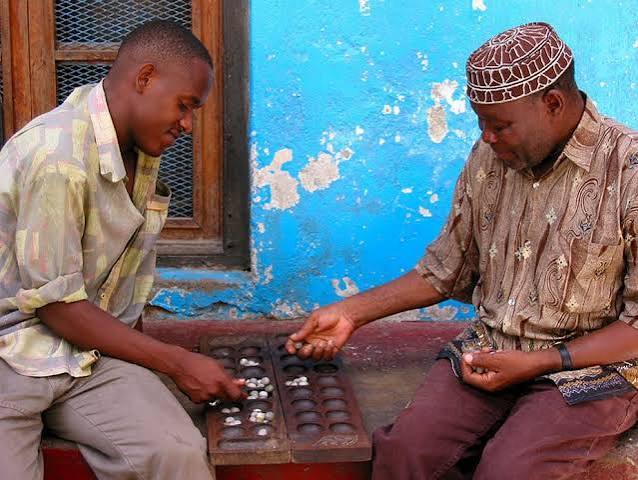
Omweso is a traditional Ugandan board game associated particularly with the Baganda people of Buganda. It belongs to the wider family of sowing games in which players distribute counters across a board and attempt to capture their opponent’s pieces.
A standard Omweso board has four rows of eight holes and uses 64 counters, commonly called empiki. Each player controls two rows and takes turns moving the counters according to the game’s rules. So, if the last seed lands in the front row facing the occupied opponent’s pit they would all be captured. Lastly,
Omweso is a strong example of Uganda’s intellectual and cultural heritage. Travellers interested in Ugandan history can ask local cultural guides about opportunities to see the game played and learn its rules.
2. Bao – East Africa
Bao is a strategic sowing game played in parts of East Africa, particularly in Swahili-speaking communities in Tanzania, Zanzibar and Kenya. It uses a board with rows of pits and counters made from seeds or similar small objects. This is a kind of algorithmic board game where players get to sow the seeds to create mathematical chains that are complex to take over all the options of the opponent. Or even take on their front row and it is also played on a 4 x 8 board with 64 seeds.
3. Ampe – Ghana
Ampe’s a lively traditional game in Ghana that’s all about jumping up and down, clapping your hands and getting those feet in sync. You’ll find loads of kids playing it in Ghana and it’s especially popular among the girls in school playgrounds. Two players go head-to-head, clap at the same instant, jump up and then stick out one foot. The rules are usually that whoever gets their foot in exactly the right position scores. It’s a simple game that needs zero equipment, so you can have a bash in a schoolyard, courtyard or out in an open space.
Visitors in Ghana can give Ampe a go and have a ball learning all about the local songs, rhythms and banter that come with it.
4. Laamb – Senegal
Laamb is the Wolof word for Senegalese wrestling and its history is rooted in the old wrestling traditions, particularly with the Serer communities. Over time it evolved into a serious spectator sport. In a Laamb bout, it’s a battle of strength, balance, grip and technique, all the basic stuff, really. But when you get the big pro Laamb contests going, there’s music, some pretty cool ceremonial stuff and these wrestlers will go to town with their pre-match rituals.
But it’s more than just a fight, the sport’s got deep roots in community events and celebrations. And now Laamb’s become a real part of Senegal’s sporting culture. If you’re interested in checking out Laamb, just find out if there’s a competition or demo going on during your visit.
5. Nguni Stick Fighting – South Africa
Nguni stick fighting has been and is a long-standing traditional sport and martial game that’s deeply rooted in the culture of the Nguni peoples of southern Africa, including the Zulu and Xhosa communities. The sport typically involves controlled contests where participants whack each other with sticks, as much as use them for self-defence. The culture of herding, where people herded cattle, was where this practice really took off – not to mention being used as a demonstration of skill in public gatherings and in some cases even as a way of preparing for combat and looking out for one another.
Different communities and styles use different equipment and rules, so to get a true understanding of this you really need to know the local cultural context rather than trying to lump it in as just an African fighting game. Finally, because stick fighting can be a pretty brutal affair, it’s a good idea to watch a demo put on by some experienced practitioners, rather than trying it out yourself without proper instruction and safety measures.
6. Ekigo Ekiganda – Uganda
Ekigo Ekiganda, we reckon that might be the name given to a traditional form of wrestling in Buganda in some histories. Essentially, wrestling tests your strength, balance, and ability to get the other guy on the ground. Traditional wrestling and physical competitions are pretty common in different parts of Africa, and you’d be right to be curious about the rules, history and local slang. However, the only way to really get a handle on a particular Ugandan form of wrestling is to check in with some local cultural experts and get the lowdown from them.
If you’re visiting Uganda, the best way to get a feel for this African local game is to take in a demo put on by some local players that way, you’ll get a real sense of the techniques, what the locals consider good etiquette, and the cultural context behind it all.
7. Kwepena – Uganda
Kwepena is a traditional dodging game played with a ball in Uganda. In the most common version of the game, two groups stand at either end with a bunch of people in the middle trying to dodge a ball that’s being thrown at them. To play this game, you need pretty quick reactions, awareness of who is throwing the ball, and the ability to change direction on an instant, quite the challenge. Additionally, its usually played out in the open and has got its own name in other places that are similar.
Getting to know Kwepena is a great way to get a feel for the culture of Uganda’s living games scene, so if you want to have a go yourself, you might be able to get a supervised demo or even have a go.
8. Nyama Nyama Nyama – East Africa
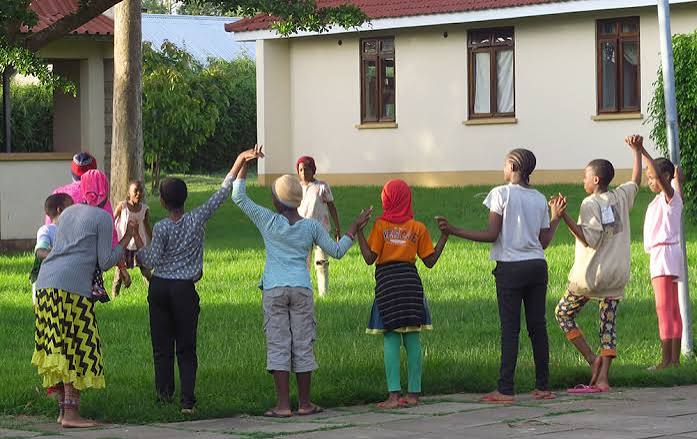
Nyama Nyama Nyama, we’ve come across this in some historical accounts as a game that kids play where they have to listen and respond. A leader calls out the name of an animal, and the others respond in the way the group has agreed beforehand. The trick to this traditional game in East Africa is to listen really carefully and respond on the fly, not just jump in every time someone calls out a name.
It’s a great way for kids to get some practice at paying attention, using their language skills and learning to control their impulses. Also, the rules can vary a lot between communities, especially when it comes to which animals get what response. So, the best way to get to grips with the version that’s played in a particular place is to get a local to explain it to you.
9. Duulu – Uganda
Duulu is a traditional game that’s been around for ages, associated with Uganda, where you flick small objects like marbles and try to get them into a hole or a target. This traditional African game is all about control, accuracy, and above all, patience. So, this is because you really have to think carefully about the force and direction of each move, especially when you’re competing against someone else.
The Duulu rules vary a lot depending on where you are in Uganda, the name and the way it’s played can differ. So, the best thing to do if you want to have a go is to ask a local player to show you the version they know.
10. Sssonko game in Uganda
This is an iconic grid game in the Buganda culture where children would draw a large rectangular box with lines in it on the ground, sometimes using a stick in the sand and other times using chalk on cemented surfaces. Then, players use a marker like a stone that they toss into the square boxes, then hop on one leg and collect it. So, the one who successfully tosses the marker into all the boxes is the winner.
11. Oware – West Africa
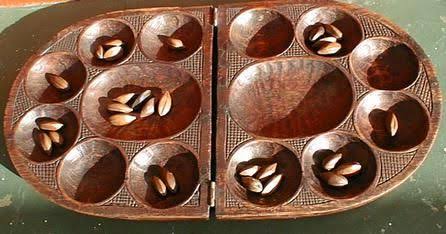 Oware is a traditional strategy game in the mancala family and is played in Ghana and other parts of West Africa. Players distribute seeds or counters between pits on a board and capture counters according to the rules of the particular version. So, this local game requires counting, planning and the ability to predict an opponent’s next move. It can be played with a purpose-made board or, in informal settings, with holes in the ground and small objects.
Oware demonstrates how a simple set of materials can support a complex strategic game. Lastly, it is related to other sowing games found across Africa, but its name and rules should not be used as synonyms for Bao or Omweso.
12. Dambe – Nigeria
Dambe is a traditional fighting sport associated with Hausa communities in Nigeria and neighbouring parts of West Africa. It developed within a distinctive cultural and sporting setting and has historically been linked to organised contests and travelling groups of fighters. Dambe bouts involve striking techniques and require physical conditioning, timing and tactical awareness. Modern events may use formalised rules and organised competition structures.
Dambe is a combat sport, not a casual children’s game. Visitors should seek out recognised events or demonstrations and follow the guidance of organisers.
Frequently Asked Questions About Traditional Games in Africa
What are the most popular traditional games in Africa?
Popular local games in Africa include Omweso in Uganda, Bao in East Africa, Oware in West Africa, Ampe in Ghana, Laamb in Senegal and Nguni stick fighting in southern Africa. Also, popularity varies by country, community and age group.
What is the difference between Omweso, Bao and Oware?
All three belong to the wider family of sowing games that use counters placed in board pits. However, they have distinct rules, playing methods and cultural associations. They should be treated as separate games rather than different names for the same activity.
Are traditional African games still played today?
Yes. Many traditional games remain part of children’s play, community recreation, organised sport and cultural events in Africa. Some are also being documented or revived through educational and cultural programmes.
Can tourists participate in traditional African games?
In most African countries, yes. Participation depends on the game, location, host community and safety requirements. Travellers should arrange activities to do with our trip experts from Goar Africa Safari Tours and follow the rules provided.


