
Community Tourism in Uganda: Experiences, Places and Responsible Travel (2027)
Community tourism in Uganda offers travellers a chance to experience the country through the people who live in its villages, forests, wetlands and mountain communities. Instead of spending the entire Uganda trip in national parks and lodges, travellers can join a village walk in Lake Bunyonyi or Bigodi Wetland Sanctuary, learn how locals grow and prepare coffee, stay with a host family, explore a wetland with community guides, or take part in a cultural activity led by residents.
The difference between a normal Uganda safari and community tourism experiences is not simply the type of activity or the involvement of the people who live there. In well-managed community-based tourism for example the Batwa in Bwindi Impenetrable have a meaningful role in planning, operating and benefiting from tourism. They may work as guides, homestay hosts, craft makers, cooks, boat operators, or cultural interpreters. Some community organisations in Uganda also direct part of their earnings towards projects selected by their members.
A community tourism activity does not necessarily have to be located inside a village. It can take place around a wetland, forest, lake, mountain or protected area, provided residents have a genuine role in delivering the experience and receiving its benefits. For example, a visitor exploring Bigodi Wetland Sanctuary near Kibale National Park can have a guided walk led by local people. The organisation behind Bigodi tourism, KAFRED, explains that income generated through tourism supports community projects. Visitors can also book cultural village walks through the organisation.
Uganda has a range of community tourism experiences, particularly around Bwindi Impenetrable National Park, Kibale Forest, Lake Bunyonyi, Mount Elgon, the Rwenzori Mountains, Mabamba Wetland and the Karamoja region.
The Uganda Community Tourism Association (UCOTA) brings together community tourism groups involved in activities such as accommodation, guiding, restaurants, crafts, and cultural performances. The Uganda Tourism Association lists more than 70 UCOTA member groups, representing 2,121 individuals. This indicates organised community tourism activity across the country.
For visitors planning a Uganda safari with Goar Africa Safari Tours, these community tourism experiences provide an opportunity to understand the communities living alongside the country’s wildlife and natural attractions.
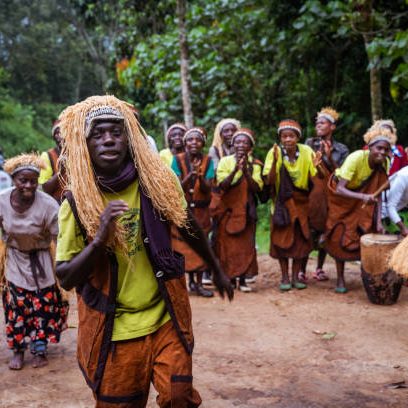
What are the benefits of Community Tourism in Uganda?
- Money paid for a village walk, a homestay or a craft workshop during these community tours in Uganda goes straight into local households, often to people who have few other ways of earning cash. A single guide’s wage can pay school fees for several children, and a group of women selling baskets can earn more in a good tourist season than they would in months of farming alone. When a community earns a steady income from a forest, a wetland or wildlife, it has a strong reason to protect it.
- Uganda’s wildlife authority shares part of park gate revenue with neighboring communities, which funds roads, schools and health centers.
- Cultural preservation is another important significance of this kind of tourism for instance, dances, songs, crafts, cooking and oral history become valuable. So, young people see a reason to learn them from their elders instead of leaving them behind.
- For groups that have lost land or status, such as the Batwa, telling their own story to visitors is also a way of reclaiming dignity during such community tours.
- Then, there’s also empowerment, as community tourism creates work for women and young people in particular, who are often excluded from formal jobs. Also, the locals, including former poachers and charcoal burners, are employed as rangers, guides and trackers.
- Similarly,many community groups are led by women, from craft cooperatives to homestay networks, and many have grown into small businesses with bank accounts, training and savings.
- Lastly, Uganda Community Tourism is a better experience for travellers as people who stay in a community tend to remember names, meals and conversations long after they forget the lodges and the itinerary.
Why Choose Community Tourism in Uganda?
- In many African tourism destinations, studies suggest that only a small fraction of what visitors spend ends up in the local economy. Community-based tourism in Uganda flips that. When you pay a village guide, eat in a family kitchen or buy a basket directly from the weaver, the money lands in local hands within days. Around Bwindi, for example, communities that were once cut off from the park’s income now run campsites, craft shops, and guided walks, and the revenue pays for school buildings, water tanks, and health services. A single Uganda gorilla permit costs several hundred US dollars, and a share of each permit goes back to the surrounding communities, but the village walks and homestays add much more that visitors can control directly.
- Secondly, Uganda is home to about half of the world’s remaining mountain gorillas, and Bwindi alone holds roughly 450 of them. These numbers grew because communities and the state began working together instead of against each other. When a forest produces jobs, the people nearby defend it. The Bigodi Wetland near Kibale, for instance, is managed by a local community group, and the walk through it, where you can spot primates and dozens of bird species, funds nearby schools and women’s projects. So, visiting places like Bigodi Wetland is a quiet vote for conservation that works because locals benefit.
- A safari shows you animals, but a Uganda community experience shows you the country itself. So, you learn how bananas are turned into beer, how a cow is milked with the right song, or why a certain hill is sacred.
- Uganda’s cultural variety is remarkable, with the Baganda, Banyankole, Bakiga, Batwa, Karamojong, Basoga, Bagisu and many other groups, each with their own food, music and traditions. A day with one of them gives context that no guidebook can.
- A large share of community tourism work in Uganda is done by women, in cooking, weaving, hosting and storytelling. Groups such as craft cooperatives around Bwindi, Lake Bunyonyi and Kisoro give women a regular income and a voice in village decisions. Young people trained as guides, birders and drivers have a reason to stay and build a career at home, which matters in a country where roughly three-quarters of the population is under 30.
- A village homestay or community campsite in Uganda can cost a fraction of a lodge, sometimes between 10 and 40 US dollars a night including meals, depending on the area.
- Many travelers say these community tour moments become the highlight of the trip, even when the gorillas and the lions were the reason they came.
Best Community Tourism Experiences in Uganda
1. The Batwa Cultural Experience, Bwindi and Mgahinga
The Batwa are among the oldest forest people in Central Africa, and until the early 1990s they lived in the forests that became Bwindi and Mgahinga National Parks. After the parks were created, the Batwa lost access to their homeland, and today only a few thousand Batwa live in Uganda. On the Batwa community tour experience, Batwa guides lead you into the forest to show how they once hunted, collected honey, gathered medicinal plants, and lit fires, then sing and dance for you in the village.
Note that this tour can be a moving experience. So, many visitors describe a mix of wonder and quiet sadness, hearing a people explain what the forest meant to them and what was lost. It also helps in real, practical ways: income from the trail supports Batwa families with land, housing, education, and healthcare, and it gives them a platform to tell their story in their own voice.
2. Bigodi Wetland Sanctuary Walk near Kibale
The Bigodi Wetland walk takes you along a raised boardwalk through a swamp teeming with life, with red-tailed monkeys, olive baboons, grey-cheeked mangabeys and more than 200 bird species. Our local Ugandan guides are trained by the community, and easily spot things you would walk straight past, and the walk ends with a village visit.
This nature walk around the Bigodi Wetland Sanctuary feels unhurried and generous, like being shown around by neighbors. The sanctuary was set up in the early 1990s by local people, and the proceeds go to school fees, classrooms, health activities and women’s craft groups in the surrounding villages. It is one of the best-known examples in East Africa of how a modest wetland can pay for a community’s development.
3. Lake Bunyonyi Homestays and Canoe Trips
Lake Bunyonyi, in the southwest, is dotted with terraced hills and around two dozen islands. Local families host visitors in simple homestays, serve meals of fresh tilapia, potatoes and greens, and take you out in dugout canoes at sunrise when the lake is still and the hills are reflected in the water.
Most people say Lake Bunyonyi homestays are the most peaceful experiences in Uganda. A night with a host family often turns into a long evening of stories about farming, school, and the lake itself. The income generated from the Lake Bunyonyi homestay tours pays for household needs and helps local women’s groups and boat operators earn year-round, and several homestay projects reinvest in local schools.

4. Rwenzori Mountain Trails with Community Guides
The Rwenzori Mountains, “Mountains of the Moon,” are one of Africa’s great hiking destinations, and many of the porters, guides and cooks are from the nearby Bakonzo community. The Kilimanjaro Rwenzori are one of the best-known community-run operators.
Trekking Rwenzori through mossy forest and giant heather in the company of people who grew up on these slopes is humbling. They know every trail, every plant and every story. Fees and wages from this community tour experience support families in Kasese and the surrounding villages, and the project has trained hundreds of guides and porters, offering a steady income in an area that has had few opportunities.
Where: Kasese and the Rwenzori Mountains region
Possible activities: Guided hikes, mountain trekking and cultural visits
Can be combined with: Queen Elizabeth National Park, Kibale National Park and Fort Portal
5. Sipi Falls Coffee Tours, Mount Elgon
On the slopes of Mount Elgon, near Kapchorwa and Sipi Falls, smallholder families grow Arabica coffee, and community-run tours take you through the whole process: picking the cherries, drying, roasting over a fire, grinding by hand, and finally drinking a cup beside the farmer who made it. Many community tours at Sipi Falls also include hikes to the three tiers of Sipi Falls and meals in local homes.
It feels very hands-on and a little humbling, because you realize how much work sits in a single cup. These farmers earn directly from tour fees and sales, often more than they would selling raw beans, and the tours help keep young people on the land by showing them coffee can be a good living.
Where: Sipi, Kapchorwa District, eastern Uganda
Possible activities: Coffee farm visits, processing demonstrations, coffee tasting and waterfall hikes
Can be combined with: Mount Elgon hiking and eastern Uganda road trips
6. Mabamba Swamp Shoebill Canoe Trips
Mabamba Swamp, near Entebbe, is among the best places in Uganda to see the shoebill, a huge, prehistoric-looking bird that stands motionless in the papyrus. Local canoe guides, who know where the birds feed, paddle you quietly through the channels, often within a few meters of one.
The moment you spot one is hard to forget, and many visitors fall silent. These shoebill canoe trips in Uganda provide income for local paddlers and guides, and because their livelihoods depend on the birds, they act as the swamp’s protectors. Uganda is thought to have only a few hundred shoebills, so this community involvement matters for their survival.
Where: Mabamba Wetland, near Entebbe
Possible activities to do: Guided canoe trips and birdwatching
Can be combined with: Entebbe, Kampala and Lake Victoria excursions
7. Karamojong Cultural Visits, Kidepo, and Karamoja
In the dry northeast, the Karamojong have traditionally been pastoralists, and visits to their homesteads let you see a way of life built around cattle, community, and the seasons. Around Kidepo Valley National Park, local groups arrange visits to manyattas, dance performances, craft sales and walks with guides, and the Ik people of Kamion offer their own mountain-top experience.
The money genereated from the Karamojong cultural visits gives pastoral families an alternative income in a region that has struggled with drought, poverty and insecurity, and it gives women, who make beadwork, baskets and ornaments, a place in the cash economy.

8. Buhoma and Nkuringo Village Walks, Bwindi
On the edges of Bwindi Impenetrable National Park, community groups run village walks that take you through banana plantations, a traditional healer’s compound, a blacksmith’s workshop and a local school and more. So, these often end with a cooking demonstration, a local brew, and a performance by a village dance troupe.
It feels a lot like being welcomed into someone’s family. After the intensity of a Uganda gorilla trek, it is a gentle way to understand the lives of the people who share the forest with the gorillas. Fees and craft sales fund schools, health centers, and water projects, and community campsites and cooperatives such as Nkuringo and Buhoma have grown out of this income.
Where: Buhoma and Nkuringo, Bwindi region
Possible activities: Guided village walks, craft demonstrations, cooking and cultural performances
Can be combined with: Bwindi gorilla trekking, Batwa experiences and Lake Bunyonyi
Other Community Tourism Experiences to Consider in Uganda
The eight destinations above are not the only opportunities for community-based travel in Uganda. Depending on the route and availability, visitors can also ask about:
- Local Ugandan cooking experiences: Learn how Ugandan dishes are prepared using ingredients such as matoke, groundnuts, beans, cassava and seasonal vegetables.
- Traditional craft workshops: Meet artisans who make baskets, mats, beadwork, pottery and other locally produced items.
- Fishing community visits: Learn about fishing practices and lakeside livelihoods through organised visits with local hosts.
- Farm visits: Spend time with smallholder farmers and learn about coffee, bananas, vanilla or other crops grown in the region.
- Community-led birding: Explore local habitats with guides who have knowledge of resident and seasonal birdlife.
- Local music and dance: Attend performances arranged by community groups, with clear information about who is performing and how the group is paid.
Availability, quality and community ownership vary. Goar Africa Safari Tours should confirm the host organisation and the actual activity before presenting any of these as a bookable experience.
How Community Tourism Works in Uganda
1. Community participation and decision-making
Community-based tourism does not start with a visitor. It starts with a conversation in the village. The first step is community mobilization, where elders, women, youth and local leaders meet to ask whether tourism is something they actually want and what they are prepared to share. This stage matters more than any other, because projects imposed from outside tend to collapse once the funding ends.
A skilled facilitator, often from an NGO, a district tourism office or UCOTA, helps the group look honestly at what they have to offer, whether that is a waterfall, a wetland, a craft tradition, a cultural story or simply a beautiful view and a welcoming home.
2. Organisation and management
Next, the group organizes itself. Most community tourism projects form a registered association or cooperative, with elected leaders, a constitution, a bank account, and clear rules about how income is shared. This is where many projects succeed or fail, and the best ones are transparent from the beginning, with decisions about spending made publicly and a fixed percentage of income going to a community fund.
The group then registers with the local government and the relevant authorities, and where the activity involves a protected area. So, it must coordinate with the Uganda Wildlife Authority or the National Forestry Authority, whose agreements often decide where visitors can walk and how revenue is shared.
3. Developing the tourism experience
The third stage is developing the product. Members decide which experiences to offer, such as a guided walk, a homestay, a cultural performance, or a cooking class, and they train for it. Guides learn first aid, interpretation, hospitality and safety. Hosts learn about hygiene, bedding and food preparation. Many groups get help from tourism training programs and partners, and visitors are told clearly what to expect, including the cultural rules, such as dress, photography and gifts.
4. Pricing and booking
Pricing and marketing come next. The community sets fair, transparent prices that cover costs, pay workers and feed the community fund. Then comes the hard part, which is reaching visitors. Many groups now work with licensed Ugandan tour operators, list on the Uganda Tourism Board’s channels, use social media and websites, and partner with nearby lodges and park offices that send visitors their way. A reliable phone number, clear booking steps and fast replies make a bigger difference than a fancy brochure.
Hosting visitors
Once visitors begin to arrive, the work shifts to delivery and care. A good host briefs guests before the activity, explains customs, keeps groups small, looks after safety, and collects feedback. The group records income and spending, shares reports with members and puts money into the projects the community has chosen, from classroom repairs to a clean water point.
Finally, projects monitor and adapt. Good groups look at the impact of tourism on their environment and culture, adjust visitor numbers if a trail is being worn down, rotate tasks so that benefits are shared widely, and keep training younger members to take over. Tourism has seasons, and the strongest projects keep farming, fishing, and other work alive alongside it, so a slow month never becomes a crisis.
For travelers to Uganda, the community tour experience process is simpler: choose a project that is community-owned or clearly shares income with local people, book ahead through the group or a trusted operator, bring cash in small notes, ask before taking photos, and spend where the community can see the benefit.
Community Tourism and Wildlife Conservation in Uganda
In some places in Uganda where people live next to protected areas, community tourism and wildlife conservation are intertwined. Uganda Wildlife Authority’s revenue-sharing programme provides one formal link. UWA states that 20% of park revenue is shared with communities around national parks and wildlife reserves. The programme is intended to support livelihoods and reduce human-wildlife conflict.
The funds are channeled through the Uganda local government structures for approved projects. They are not the same as the money a visitor pays directly for a village walk, homestay, or cultural activity. Community tourism can provide another source of income. Residents may work as guides, boat operators, craft makers, accommodation providers or cultural interpreters. In some places to visit in Uganda, community organisations also support conservation awareness and environmental activities.
The relationship is not automatic: a community tourism project needs sound management, fair participation and a clear connection between the activity and the people who benefit from it.
Frequently Asked Questions About Community Tourism in Uganda
1. What is community tourism in Uganda?
Community tourism in Uganda involves travel experiences in which residents own, manage, operate or meaningfully participate in tourism activities and share in the benefits. Examples include village walks, homestays, cultural visits, coffee tours, canoe trips and community-guided nature walks.
2. What is the difference between community tourism and cultural tourism?
Cultural tourism in Uganda focuses on experiencing a destination’s culture, traditions, food, history, music and heritage. Community tourism places additional emphasis on local participation, ownership and the distribution of tourism benefits. An activity can be both cultural tourism and community tourism if the community has a meaningful role in managing and benefiting from it.
3. Is community tourism safe for visitors in Uganda?
Generally yes. Community groups depend on repeat visitors and good reviews, so they take safety seriously. As with any travel, follow your guide’s advice and check government travel advisories, especially for remote areas in Uganda like Karamoja.
4. Where can I experience community tourism in Uganda?
Popular areas in Uganda for community tours include Bwindi and Mgahinga for Batwa experiences and village walks, Bigodi near Kibale for wetland and cultural visits, Lake Bunyonyi for canoe trips and local visits, Sipi for coffee tours, Mabamba for community-guided birdwatching, the Rwenzori region for mountain trekking and Karamoja for cultural experiences.
5. How much does a Uganda community tour experience cost?
Prices for community tour experiences vary. A guided village walk in Uganda costs about 10 to 30 US dollars, and a homestay or community campsite with meals is often 10 to 40 US dollars a night, though some activities, like Rwenzori treks, cost much more. Always confirm prices when booking.
6. Can I combine community tourism with gorilla trekking?
Yes. Visitors to Bwindi and Mgahinga can arrange cultural experiences and village visits alongside gorilla trekking. Gorilla trekking in Uganda requires a separate permit, and community activities should be booked with our experts for a seamless experience.
7. Is community tourism in Uganda safe?
Many organized community experiences welcome international visitors, but safety depends on the location, activity, provider and current travel conditions. Book through Goar Africa Safari Tours, follow your guide’s instructions and check current travel advice before visiting remote areas.
8. When is the best time for community tourism in Uganda?
Community tourism can be experienced throughout the year in Uganda. June to August and December to February are generally drier periods in many parts of Uganda, while wetter months can affect walking trails and rural roads. Check conditions for your chosen destination.


